Performance Benchmarking in LLM Software Systems

Performance Benchmarking in LLM Software Systems
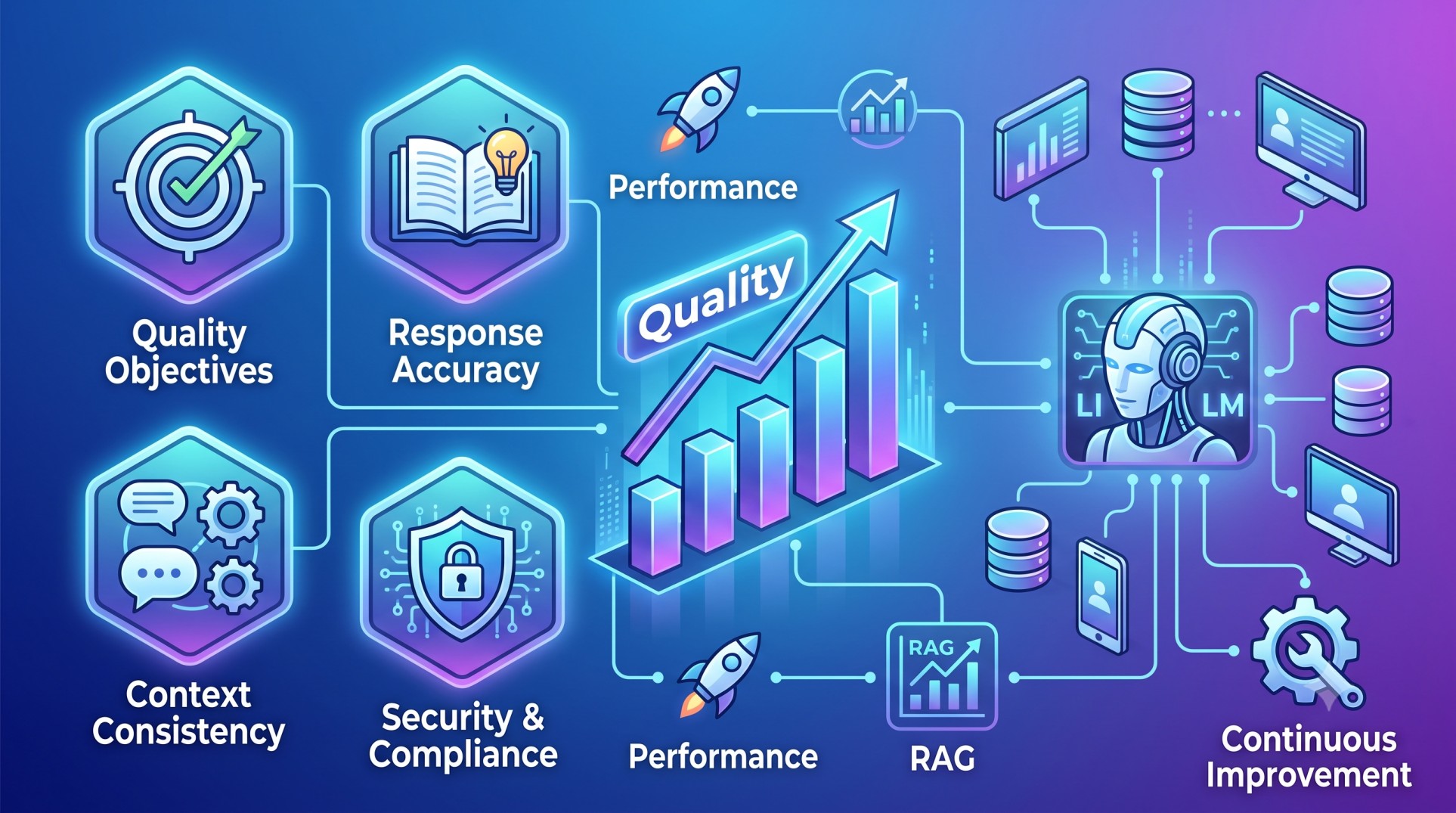
As Large Language Model (LLM) platforms continue expanding across enterprise environments, measuring system performance has become essential for ensuring reliability, scalability, and operational efficiency. Performance benchmarking helps organizations evaluate how LLM systems respond under different workloads, user demands, and infrastructure conditions. Effective benchmarking enables teams to optimize response quality, latency, throughput, and resource utilization while maintaining a consistent user experience.
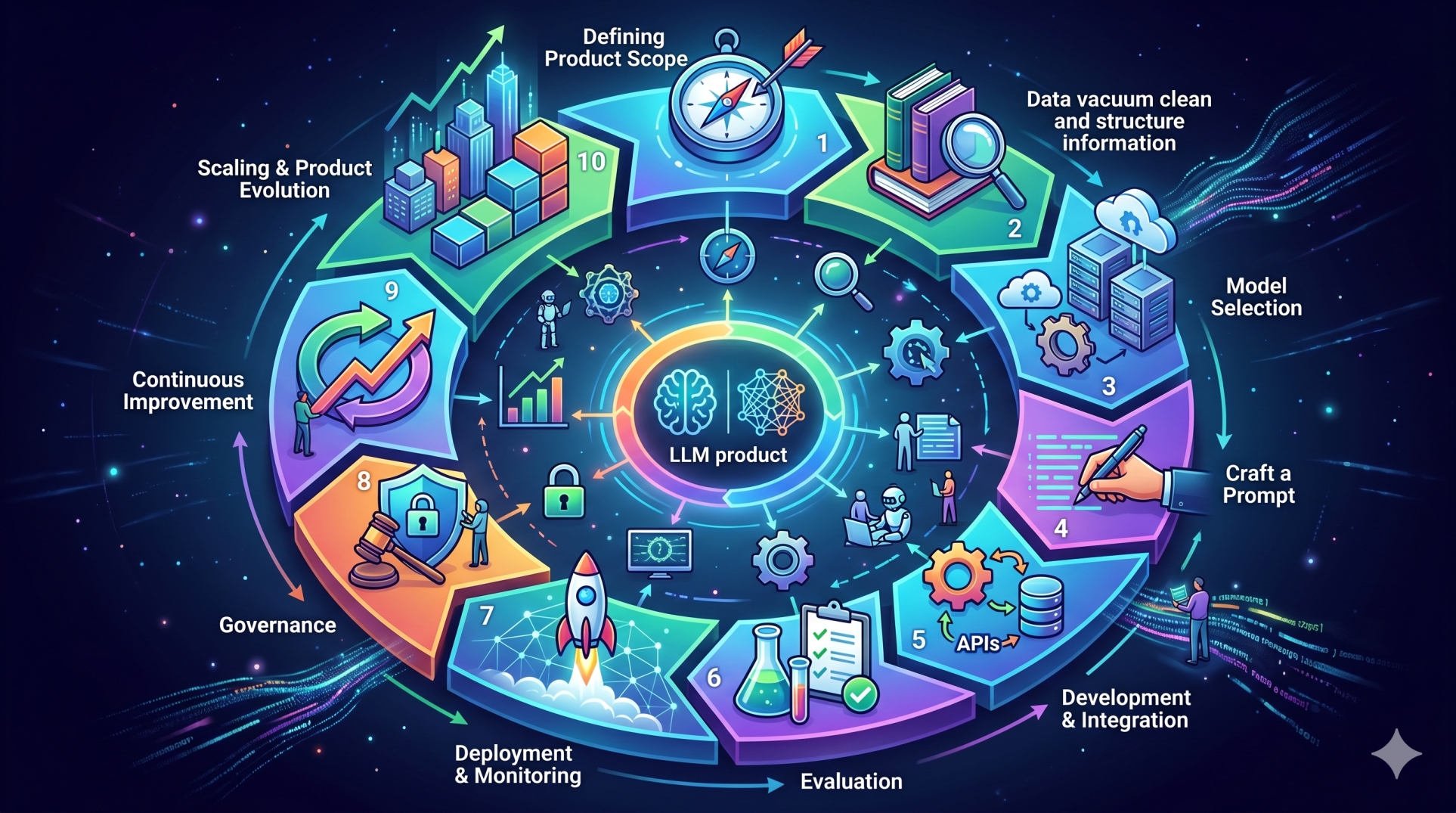
Step 1: Understanding Performance Benchmarking 📊
• Performance benchmarking evaluates the efficiency and reliability of LLM software systems 🧠
• It measures how systems behave under varying workloads and operational conditions ⚙️
• Benchmarking identifies strengths, weaknesses, and optimization opportunities 🔍
• Helps organizations establish measurable performance standards 📈
• Supports data-driven infrastructure and deployment decisions 🏗️
Step 2: Defining Benchmarking Objectives 🎯
• Identify the key performance indicators relevant to business goals 📌
• Define acceptable thresholds for latency, throughput, and accuracy ⏱️
• Establish benchmarks for concurrent user handling 👥
• Measure operational efficiency across different deployment environments 🌐
• Align testing objectives with real-world production scenarios 🏭
Step 3: Measuring Response Latency ⚡
• Evaluate the time required for the model to generate responses ⏳
• Measure latency across simple and complex prompts 📄
• Analyze delays caused by network, inference, or retrieval systems 🔄
• Identify bottlenecks affecting real-time interactions 🚧
• Optimize infrastructure to reduce response times 🚀
Step 4: Evaluating Throughput Capacity 📦
• Measure the number of requests processed within a specific timeframe 📈
• Test system performance during peak traffic conditions 🌊
• Analyze scalability across distributed environments 🌐
• Ensure stable operation during high-volume workloads 🏢
• Balance throughput with response quality and stability ⚖️
Step 5: Testing Scalability and Load Handling 🌍
• Simulate increasing user demand and operational pressure 📊
• Evaluate horizontal and vertical scaling capabilities 🧩
• Monitor system behavior during workload spikes ⚠️
• Ensure infrastructure adapts dynamically to demand 🔄
• Validate performance consistency across scaling scenarios ✅
Step 6: Resource Utilization Analysis 🖥️
• Monitor CPU, GPU, memory, and storage usage 📡
• Identify resource-intensive inference operations 🔍
• Optimize hardware allocation for maximum efficiency ⚙️
• Reduce unnecessary computational overhead 🚀
• Improve cost-performance balance across deployments 💰
Step 7: Accuracy and Output Quality Assessment 🧾
• Benchmark response relevance and contextual accuracy 🎯
• Evaluate hallucination rates and factual consistency 📚
• Measure task completion effectiveness across workflows 🛠️
• Analyze output stability under different prompt conditions 🔄
• Maintain quality standards while optimizing performance ⭐
Step 8: Stress Testing and Failure Recovery 🛡️
• Push systems beyond normal operational limits ⚠️
• Identify breaking points under extreme workloads 🚧
• Test recovery mechanisms during failures or outages 🔄
• Validate backup and failover strategies 🧱
• Ensure operational continuity during unexpected disruptions ✅
Step 9: Monitoring Real-Time System Performance 📡
• Track live operational metrics continuously 📈
• Detect anomalies and performance degradation early 🚨
• Use dashboards and analytics for visibility 👁️
• Monitor user experience across applications 🌐
• Enable proactive optimization and maintenance 🔧
Step 10: Building Continuous Benchmarking Frameworks 🔄
• Automate benchmarking processes for ongoing evaluation 🤖
• Continuously test new model versions and infrastructure updates 🧪
• Compare performance across deployment environments 🌍
• Establish long-term optimization strategies 📊
• Future-proof systems through continuous performance refinement 🚀
Conclusion
Performance benchmarking is essential for building reliable, scalable, and efficient LLM software systems. By continuously evaluating latency, throughput, scalability, resource utilization, and output quality, organizations can optimize AI infrastructure for real-world demands. A strong benchmarking strategy not only improves operational performance but also ensures long-term adaptability as AI systems continue to evolve.
See more blogs
You can all the articles below