How Recurrent Neural Networks Power Sequence Understanding in LLM Software

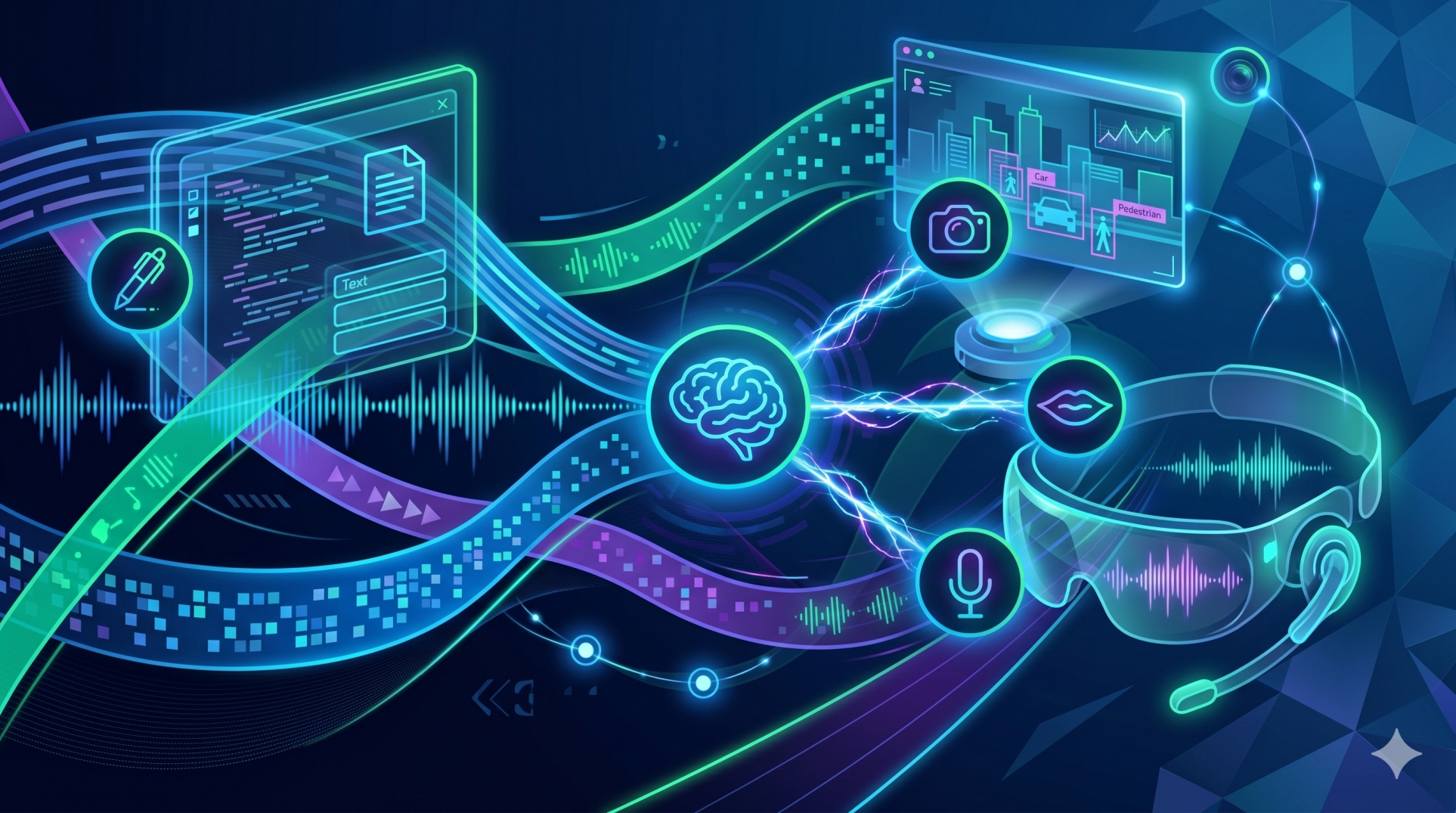
Large Language Model (LLM) software interprets data as ordered sequences rather than independent inputs. Whether working with written language, spoken audio, or time-dependent signals, understanding sequence and context is critical. Recurrent Neural Networks (RNNs) are built to address this requirement, making them a core technology for sequence-aware and temporal AI systems 🤖.
🧩 Understanding Recurrent Neural Networks
• Neural network architectures designed specifically for sequential data 🔗
• Process information step by step instead of in parallel ⏭️
• Maintain an internal state that carries contextual information forward 🧠
• Support sequence-to-sequence learning scenarios 🔁
• Reuse the same set of parameters at each time step, unlike feed-forward networks ♻️
⚙️ How RNNs Handle Sequential Information
• Inputs are processed in a fixed, ordered sequence 📊
• Each time step combines:
– The current input value 📝
– Context preserved from previous steps 🔄
• Internal memory is updated continuously 🧠
• Outputs depend on both current input and accumulated context 🎯
• Enables learning of temporal and sequential relationships ⏱️
⭐ Importance of RNNs in LLM Software
• Preserve word order and sentence meaning 📚
• Maintain context across long text or signal sequences 🔗
• Support tasks where earlier inputs affect later outputs ⏳
• Enable end-to-end modeling of sequential data 🔁
Common use cases include:
• Speech recognition 🎤
• Machine translation 🌍
• Text generation ✍️
• Time-series forecasting 📈
⚠️ Training Challenges with RNNs
• Gradients can shrink or grow excessively during backpropagation 📉📈
• Long sequences increase the risk of unstable training ⚠️
• Capturing long-term dependencies is challenging 🧠
• High computational demands for large datasets 💻
These limitations are known as vanishing and exploding gradient problems 🚨
🚀 Advanced RNN Architectures
Long Short-Term Memory (LSTM):
• Uses gating mechanisms to regulate information flow 🚪
• Maintains both short-term and long-term memory 🧠
• Retains relevant context while filtering out noise 🎯
Gated Recurrent Unit (GRU):
• Simplified version of LSTM architecture 🧩
• Requires fewer parameters 🔢
• Enables faster training with competitive performance ⚡
🔗 Role of RNNs in Modern LLM Systems
• Commonly integrated with other neural architectures 🧠
• Early layers often focus on capturing sequential patterns 🔍
• Later layers refine representations and generate outputs ✨
• Used in hybrid and multimodal AI pipelines 🤖🌐
• Established foundational concepts used in modern language modeling 📚
🏁 Conclusion
Recurrent Neural Networks are essential for enabling sequence understanding in LLM software. By carrying contextual information across time steps, they allow AI systems to process language, speech, and temporal data more effectively. While newer architectures continue to evolve, the principles introduced by RNNs remain fundamental to building intelligent, context-aware AI systems 🚀🤖.
See more blogs
You can all the articles below