Designing Permissioned Knowledge Access for LLMs
Designing Permissioned Knowledge Access for LLMs
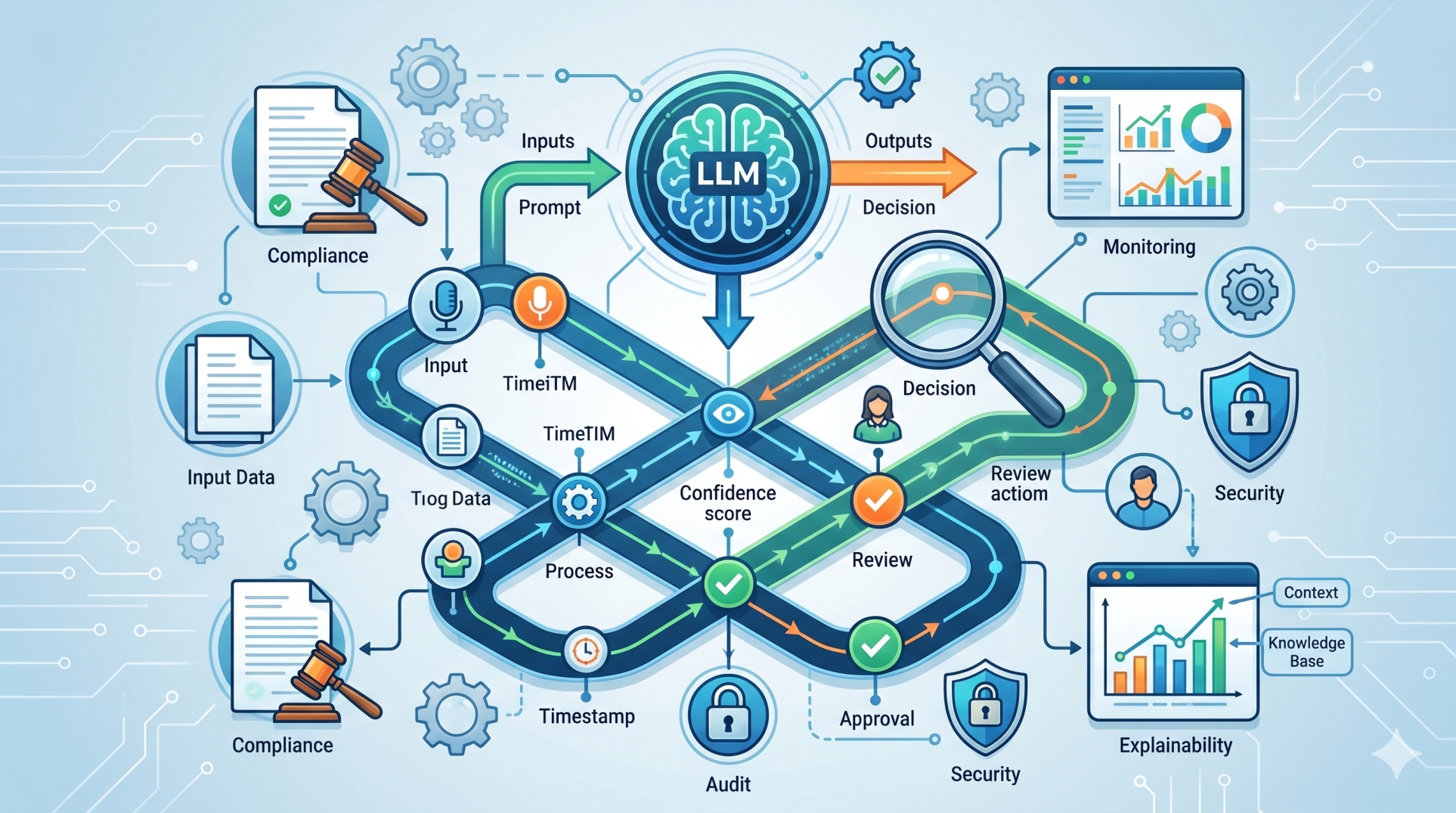
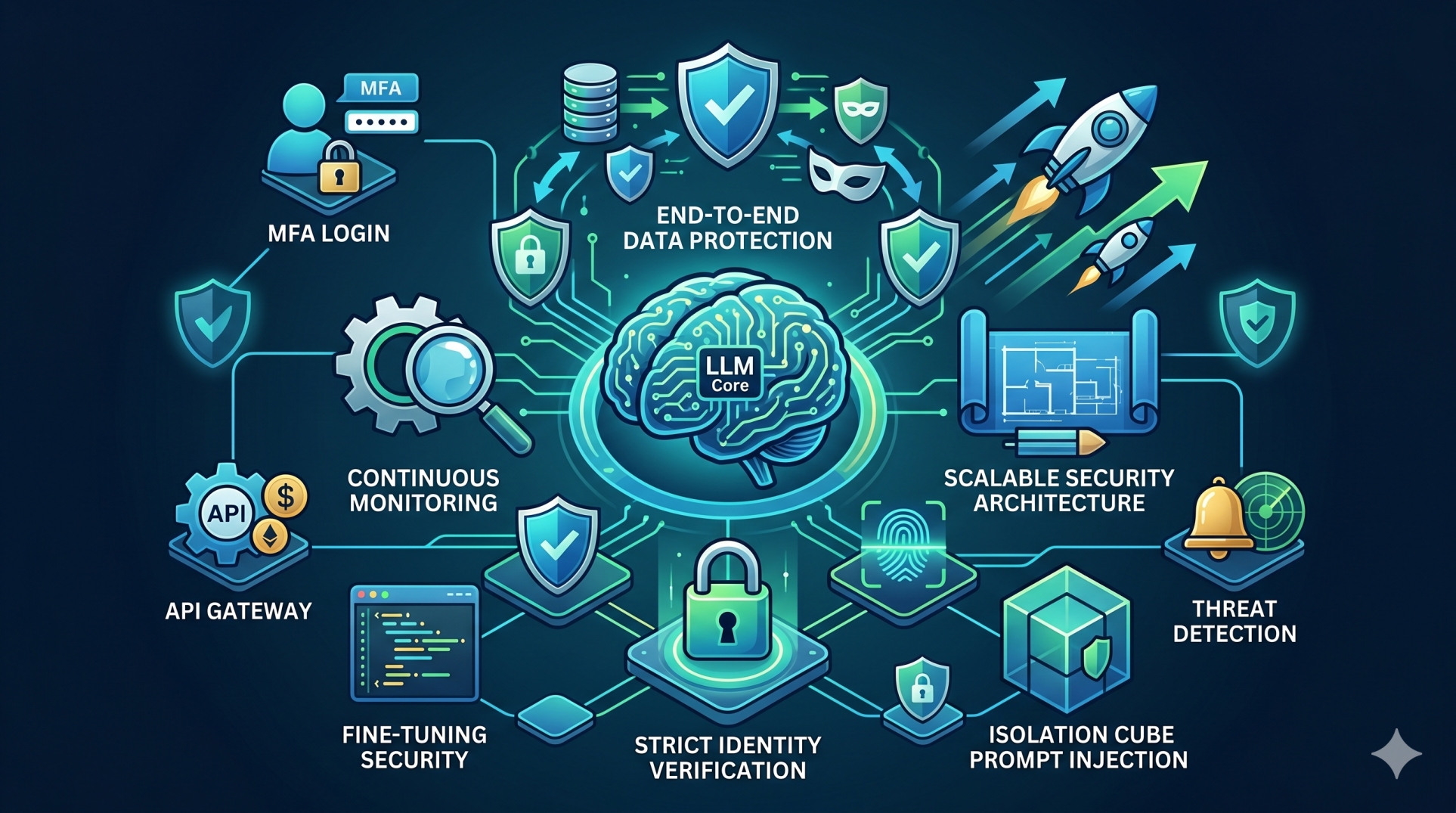
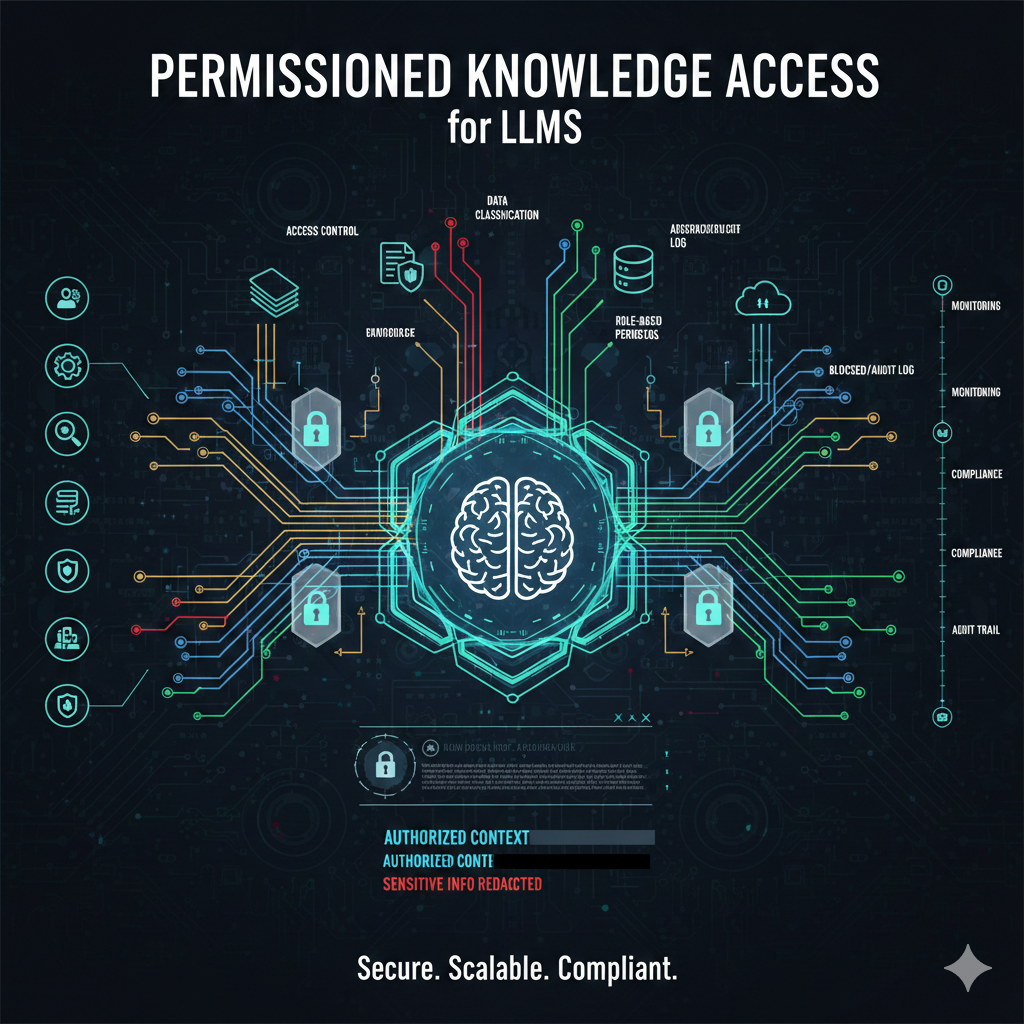
As Large Language Models become embedded within enterprise workflows, controlling information access is just as critical as model performance. Permissioned knowledge access ensures that LLMs retrieve, interpret, and generate responses using only approved data sources. When designed correctly, these controls protect sensitive information, maintain regulatory compliance, and build trust in AI-driven systems operating at scale.
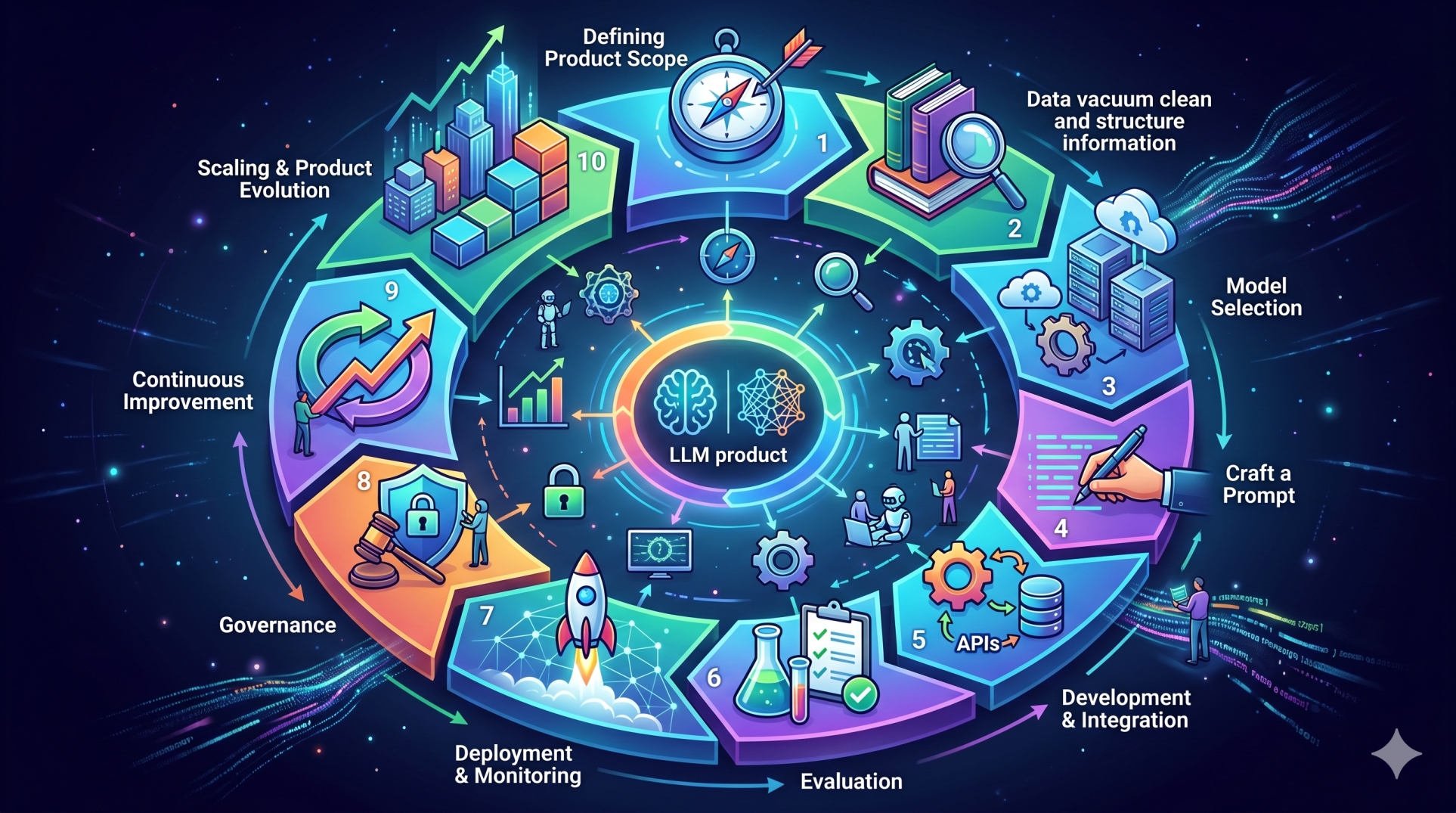
Step 1: The Importance of Permissioned Knowledge Access 🔐
• Organizations manage confidential, regulated, and role-specific information 🗂️
• Open access increases the likelihood of unintended data exposure ⚠️
• Different users require different levels of informational access 👥
• Compliance frameworks require strict data control mechanisms 📜
• Predictable access boundaries are essential for trustworthy AI behavior 🤝
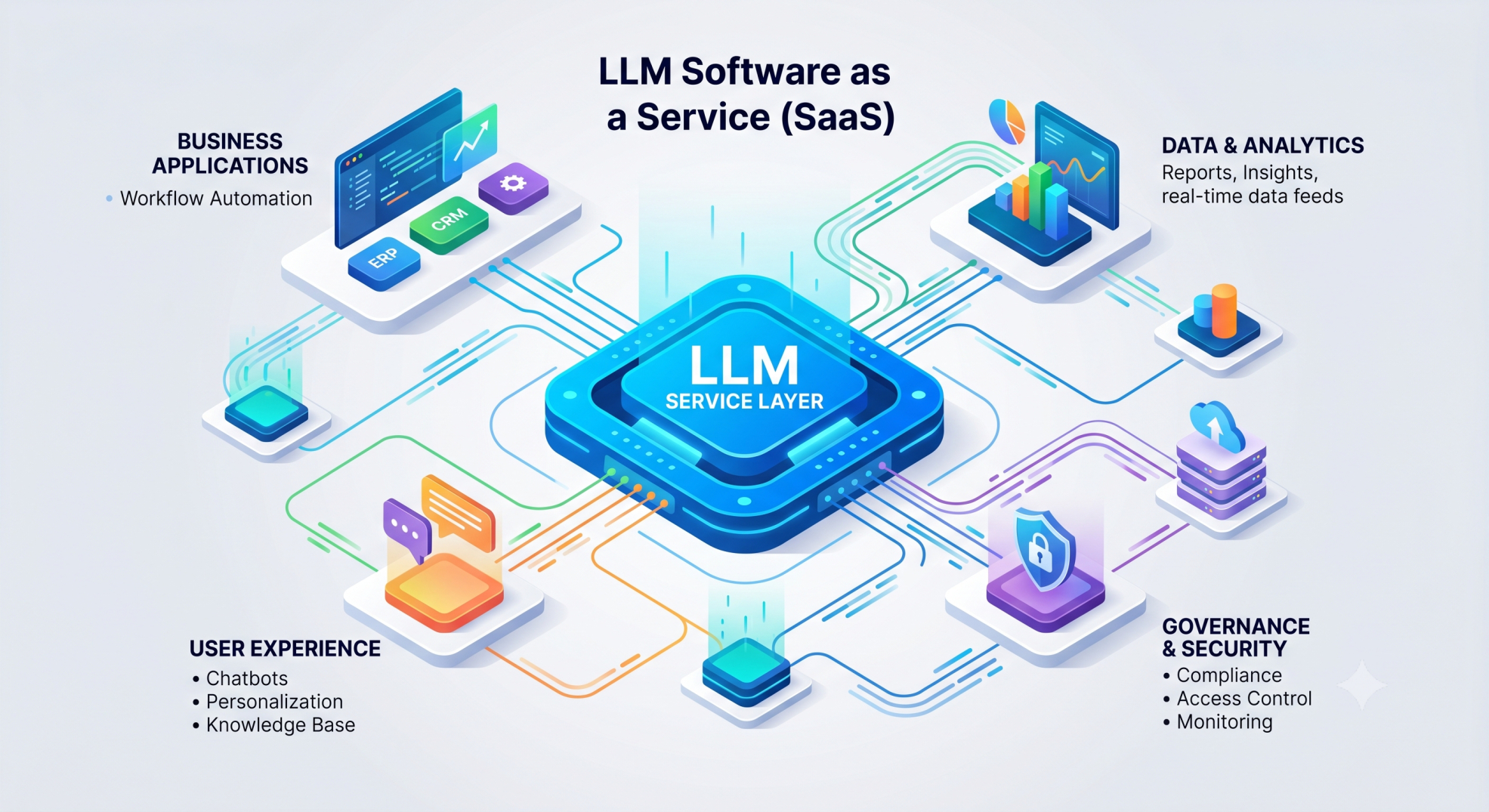
Step 2: Decoupling Model Capability from Data Access 🔗
• LLMs remain general-purpose reasoning engines 🧠
• Enterprise data is provided through controlled retrieval mechanisms 📥
• Sensitive information should not be embedded in model training 🚫
• Permissions are enforced externally to the model itself 🛡️
• Governance updates can occur without retraining models 🔄
Step 3: Establishing Roles and Permission Structures 👤
• Define clear user roles and access levels 🎯
• Associate permissions with documents, datasets, and attributes 🗃️
• Integrate access rules with existing identity systems 🔑
• Support contextual permissions based on user or request state 🔄
• Apply least-privilege principles by default 🧩
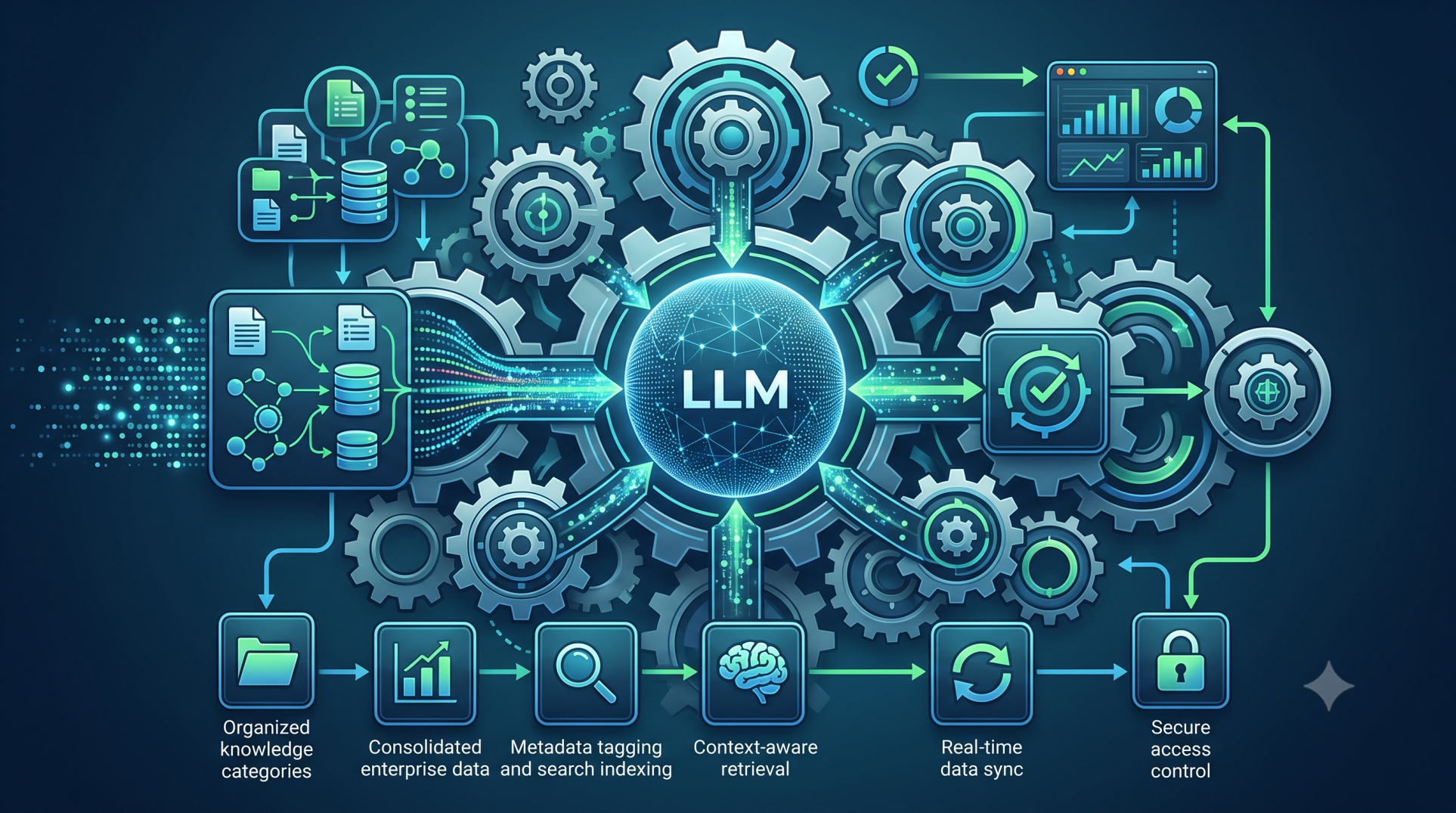
Step 4: Secure Data Ingestion and Indexing 🏗️
• Evaluate and classify content before ingestion 🔍
• Assign metadata for ownership, sensitivity, and scope 🏷️
• Store indexed knowledge in segmented or isolated repositories 🗂️
• Block unauthorized content from entering retrieval systems 🚫
• Track ingestion actions through audit logs 📒
Step 5: Retrieval Pipelines with Built-In Access Controls ⚙️
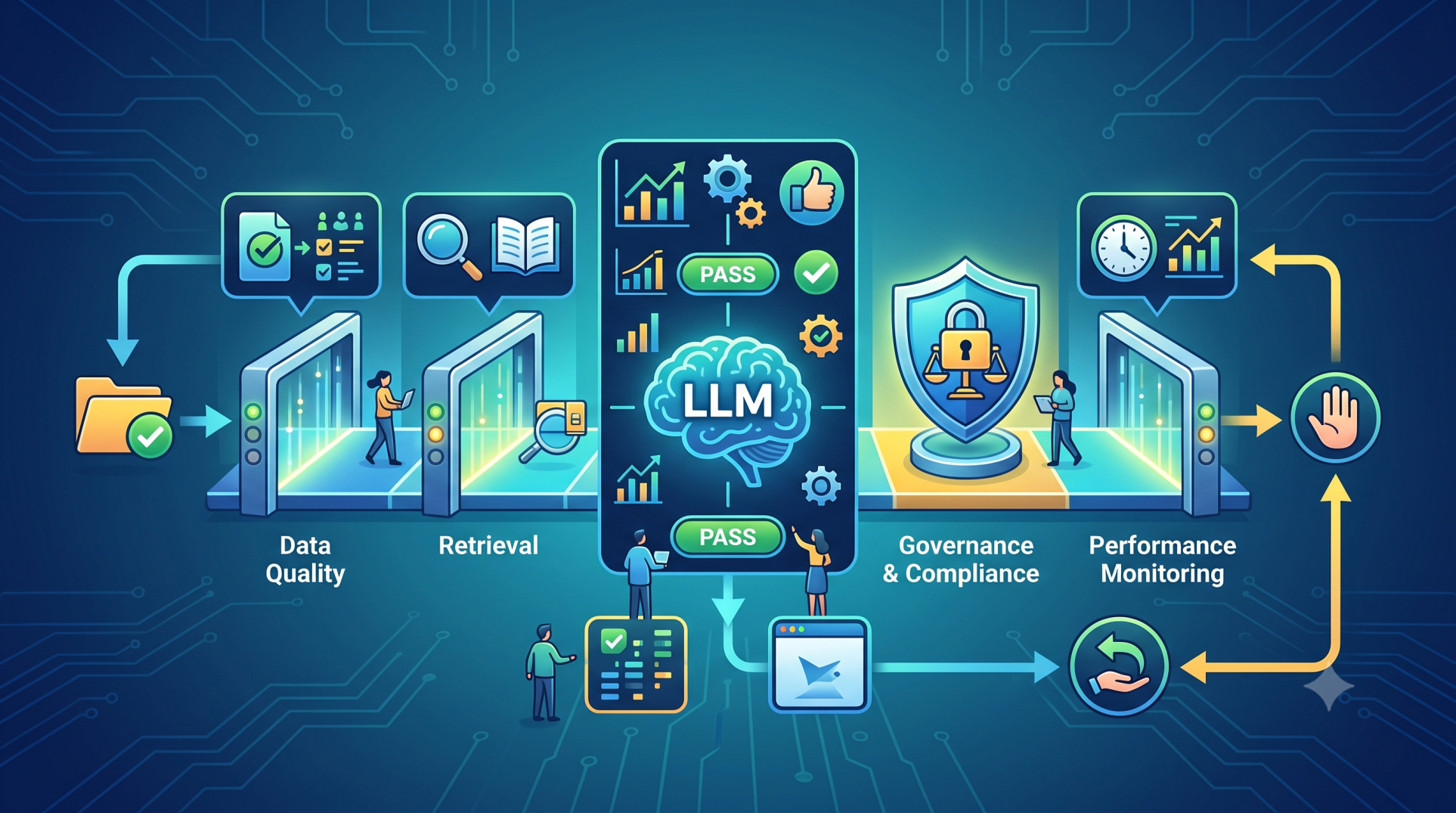
• Enforce permissions during retrieval execution 🔐
• Exclude restricted content before generation begins 🚷
• Apply consistent access rules across all retrieval paths 📐
• Prevent inference-based leakage through partial exposure 🛑
• Pass only approved context to the language model 📤
Step 6: Controlled Context Assembly and Prompting 🧠
• Construct prompts exclusively from authorized sources 📜
• Constrain context size to minimize exposure risk 📏
• Redact or mask sensitive fields when necessary 🕶️
• Separate system instructions from user-provided context 🧩
• Preserve determinism in access enforcement decisions ⚖️
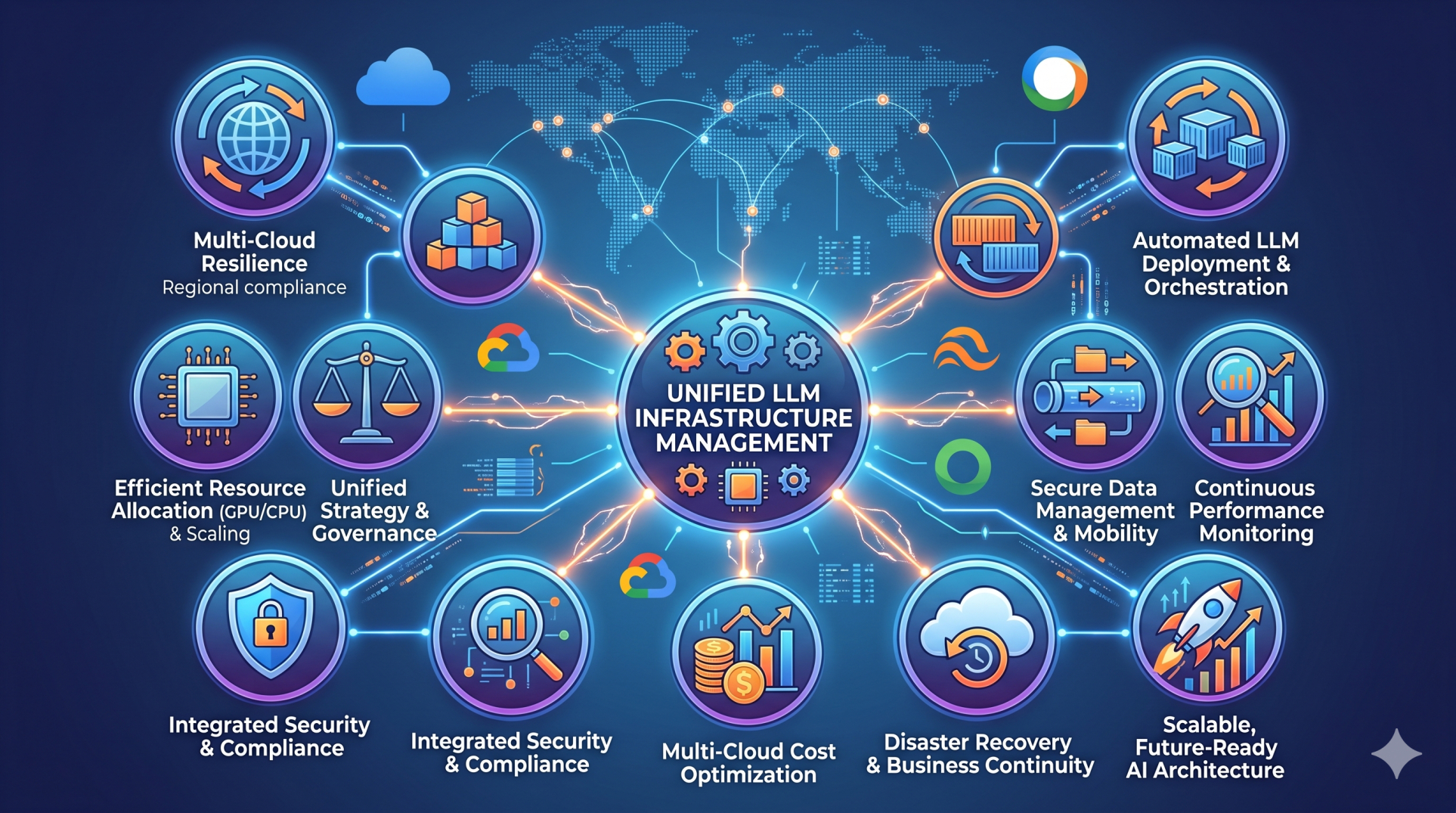
Step 7: Supporting Multi-Tenant and Cross-Group Use Cases 🏢
• Maintain strict isolation across tenants and teams 🚧
• Prevent accidental cross-organization data access 🚫
• Allow shared resources with clearly defined visibility rules 👁️
• Use tenant-aware indexing and retrieval strategies 🗂️
• Scale permission logic without adding operational complexity 📈
Step 8: Monitoring and Enforcement 👀
• Continuously verify access policy execution 🔎
• Record retrieval and response activity 📝
• Block and surface unauthorized access attempts 🚨
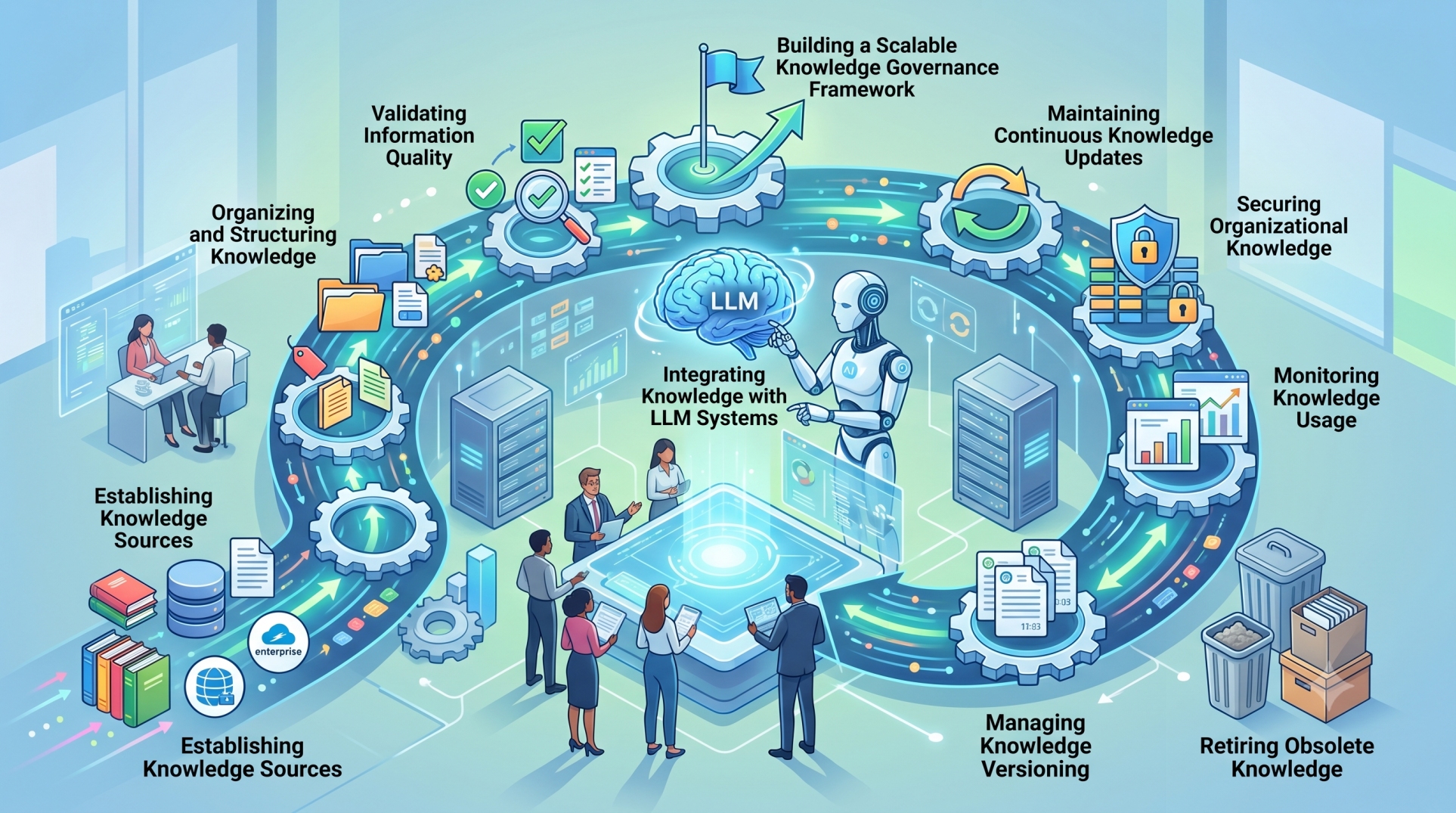
Step 9: Auditing, Compliance, and Transparency 📋
• Maintain traceability between responses and source data 🔗
• Support internal and external audit requirements 🧾
• Explain inclusion or exclusion of specific information 💬
• Prove adherence to governance and security policies 🛡️
• Strengthen organizational trust in AI systems 🤝
Step 10: Designing for Growth and Change 🌱
• Allow permission models to evolve with the organization 🔄
• Add new data sources without major architectural changes 🧩
• Scale enforcement mechanisms efficiently 📈
• Adapt to new regulatory or security requirements ⚖️
• Ensure long-term sustainability of access controls 🏗️
Conclusion
Permissioned knowledge access is a foundational requirement for enterprise-grade LLM deployments. By enforcing controls across ingestion, retrieval, and prompt construction, organizations can safely leverage their data while minimizing risk. Thoughtfully designed access systems enable LLMs to deliver accurate and relevant outputs without sacrificing security, compliance, or trust.
See more blogs
You can all the articles below